drones for inspection and audits in mining
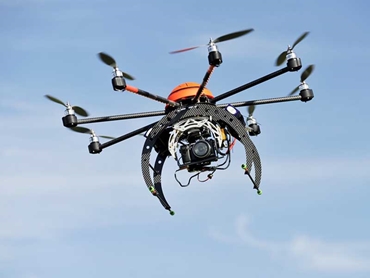
Coptercam technology has inspected a wide range of structures
Drones are the new tools for inspection and audits in the mining industry with two Australian companies coming together to give the industry a much faster and safer means to inspect or audit dangerous and inaccessible areas.
Soto Consulting Engineers in association with aerial photography specialist Coptercam is using remote control flying equipment, commonly known as drones to eliminate the need for personnel, rigging and scaffolding when conducting inspections of large scale plant and equipment, while removing the associated risks and also saving time.
Companies have more control using the drone alternative for inspections through major cost savings and the near-elimination of shutdowns for plant audits.
Managing Director of Soto Group, Mr Frank Soto observes that heavy industrial and mining environments are harsh on both the service personnel and equipment; manual inspections also result in plant downtime that can become expensive. Safety of the people involved in the task is always at some sort of risk as inspection procedures normally involve an element of physical danger. Conventional methods also overlook the overall condition of structures on some sites as the access is difficult, dangerous and expensive for operators and auditors.
Soto Consulting Engineers’ association with Coptercam opens up many new possibilities across a range of industries including civil engineering, mining, bulk handling and forensic engineering as well as the manufacturing and minerals processing sectors. Drone-based inspections involve very few people and can achieve in a single day what traditional means would take a week to accomplish.
Instead of assembling a team of professionals with harnesses, scaffolding and other structures, a Coptercam craft is simply flown into the area with a specially mounted camera capable of high resolution photo stills and video or thermal imaging. The drone is operated remotely at a safe base on the ground by a fully certified Coptercam pilot and a camera operator alongside a Soto engineer viewing an HD monitor in real time during the inspection exercise. Using the HD live camera feed to the ground, the attending Soto engineer can direct Coptercam to focus on a specific area of interest when a hazard is identified.
The Coptercam is operated by a two-person crew consisting of the pilot who controls the aircraft, and the camera operator who focusses on the image capture, the clear division of task ensuring optimal results for the plant inspection.
The camera is mounted on a 3-axis gyro-stabilised gimbal controlled independently of the aircraft above in both 360-degree pan (rotation) and 110 degrees of tilt with remote record control and shutter control.
Coptercam technology has inspected a wide range of structures including bridges, exhaust stacks, roads, elevated conveyors and handling towers among others.
Mr Soto comments that statutory structural audits in the coal mining sector will be one of the real beneficiaries of the new solution. The coal mining industry requires statutory structural audits to be undertaken annually to locate potential hazards arising through vibration, stress fatigue or corrosion.
These audits presently consume significant man hours with difficult access and terrain preventing many structures from being included in the inspection. Consequently, the true condition of the structure or plant remains unseen and unreported possibly for years, resulting in hazardous outcomes.
Coptercam’s Mr Glen McGarry says traditional methods of site inspection at a mine site, exhaust stack, bulk handling facility or high rise structure always involve a rather large team of people, a lot of OH&S induction and familiarisation, and considerable time to complete. Traditional methods also hold a high risk factor for the personnel; however, the use of drones minimises risk especially at heights or in confined spaces.
Coptercam is fully licensed and authorised by the Civil Aviation Safety Authority (CASA) for provision of all its services.
The company has offices in Perth, Sydney, Melbourne, South Australia and a satellite office in Brisbane. The ACT is serviced by Sydney and NT by South Australia.
In the hands of an accredited expert, a drone can be mounted with a camera of choice (24MP with real-time zoom function or 36MP fixed), positioned to hover in the air at any chosen viewing point, and take as many photographs as required to be subsequently analysed by Soto engineers back at the office. The Soto team can then work out the remediation plan without sending a single human being into the danger zone.
Read more at http://www.ferret.com.au/articles/news/using-drones-for-inspection-and-audits-in-mining-n2519229#qblyDw81ld3Kbxo0.99
Other Posts you might like about Drones
 Drones to monitor Abu Dhabi
 College offers class in flying drones
 Researchers plan to use drones to help Polar Bears
 Drones for the open sea